
Key takeaways
- Proximity anchors local results, so target cities where you hold real presence first.
- One genuinely local page per city beats twenty templates with swapped place names.
- Reviews and links earned inside each city stretch reach further than keywords alone.
The short answer
Owners typing how to rank in multiple cities SEO into a search bar are really asking one thing: how to appear in places where they have no address, and the answer begins with accepting how local search works. Proximity anchors the results, so you rank where you have real presence and stretch outward with proof: set up your Google Business Profile with honest service areas, build one genuinely local page per target city, and gather reviews and links from customers in each one, because those signals carry you beyond your own postcode. Never fake addresses or mass produce templated city pages, since both routes end in lost trust or penalties. Measure pack positions and enquiries per city every month, retire targets that never convert, and expand city by city as real presence grows.
What ranking in multiple cities actually requires
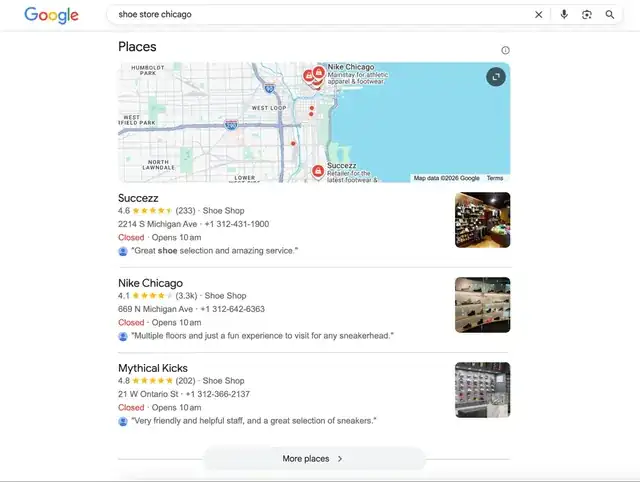
The map pack is proximity bound: a searcher in one city sees businesses with addresses or genuine presence there, and no amount of cleverness changes the pin. Organic results are more forgiving, which is where multi city strategy actually lives. You need three things working together: pages that prove you serve each city, signals that prove people in each city use you, and technical cleanliness so nothing dilutes the effort. What you cannot do is fake the anchor. Pseudo offices, virtual addresses in twenty cities and city name stuffing all get cleaned up eventually, and a suspension or a manual action costs far more than the rankings were ever worth. Plan honest expansion instead, one city at a time, and let each success fund the next.
Build one page per city, done properly
A city page earns its place only when it contains things a searcher in that city cannot find on your homepage: local projects, the suburbs you cover, case studies, testimonials from that city, travel or logistics notes and clear contact routes. Write each page from scratch around how customers in that market describe the job, because vocabulary differs even between neighbouring cities. Avoid swapping the place name inside a template; searchers spot it instantly and algorithms read thin, duplicated content as doorway spam. Whether you build in house or compare proposals, the same question applies in every market, from an agencia de diseño web Barcelona quote to a boutique elsewhere: ask to see the local research behind the page. Where there is none, the page will not rank and should not be built.
Earn proof inside each city
Presence is proven, not declared. Reviews that name the city and the job, mentions in local press or business groups, partnerships with local firms and links from community pages all tell Google that real activity happens there. Sponsor a local event, run a joint offer with a complementary business, or write something genuinely useful for a local audience. Development choices matter here too; an agencia desarrollo web Vigo team, like any competent build partner, will structure URLs so every city has a clean, crawlable home rather than burying city content behind parameters. Keep a simple ledger per city: reviews collected, links earned, pages published. Where the ledger stays empty, the ranking stays empty, however good the page looks.
Use service areas and content to rank in multiple cities
Your Google Business Profile carries up to twenty service areas, and honest zones help you appear for searches where proximity is judged loosely, though the profile will never beat a real local address for pack placement. Use the profile for the areas you can serve well and use website content for the cities you are growing into, then let the two meet in the middle. Publish city specific articles, case studies and offers over time rather than in one dump, because sustained activity reads as genuine presence. Pricing and positioning differ by market, which is why a proposal from a local agencia diseño web Malaga firm, or any specialist near a target city, teaches you what that market responds to. Reach follows proof, never the reverse.
Measure city by city before you scale
Track each city separately: pack positions for your core queries, organic positions for the city pages, profile calls, page enquiries and revenue where you can attribute it. A simple sheet per city, reviewed monthly, beats any expensive dashboard nobody opens. Give every new city a fair window, then judge honestly; if a page sits unseen after a quarter of genuine effort, the market may be too crowded or the presence too thin, and the budget belongs elsewhere. Compare notes with local expertise wherever you can reach it, from an creacion paginas web Palma de Mallorca shortlist to agencies in your own country, because pricing your expansion realistically is part of measuring it. Scale the cities that respond and let the map grow on evidence.
Frequently asked questions
Can I really rank in multiple cities where I have no address?
In organic results, yes, with a genuinely local page, local reviews and local links. In the map pack it is much harder, because proximity and a verified address dominate. Service areas on your profile help you appear around zones you can serve, but nothing honest replaces presence, so plan to earn proof in each city rather than borrowing an address.
How long does it take to rank in multiple cities with SEO?
Expect a new city page to need one to three months before it competes for longer phrases, faster in smaller markets with weak local competitors. Reviews, links and activity in that city shorten the timeline noticeably. Cities where you hold an address or a team move quickest, so sequence your expansion from strongest presence outward.
Are virtual offices a good way to appear in more cities?
Usually not. Google requires an address where you are staffed and operating during listed hours, and virtual offices routinely fail verification or draw suspensions later, taking the reviews with them. The safer route is a service area profile plus strong city pages, and a real office only when you genuinely open one in that market.
How many city pages should I create at once?
Start with one to three, the cities where you have the most customers and proof, and build them properly. Publishing thirty templated pages in a week signals doorway intent and gives you thirty pages nobody maintains. Add a city only when you can populate it with real projects, reviews and local detail that competitors cannot copy.