
Key takeaways
- If one new customer per month covers the monthly cost, the site effectively runs itself.
- A website is an owned asset; social profiles are rented shelves that change terms without notice.
- Start lean, measure cost per enquiry, then reinvest in what demonstrably brings customers.
The short answer
Is a website worth it for a small business? For most, yes, and you can prove it with arithmetic rather than faith. A $5,000 site that brings two extra customers a month, each worth $400 of margin, returns $9,600 in year one against roughly $6,400 of build and running costs. Even one extra customer a month justifies a leaner build. The exceptions are businesses whose customers genuinely never search online, and those are rarer every year. The maths takes two minutes and works with cautious numbers. Run it once before you read another sales page. What follows is the case for, the honest case against, and how to make the investment pay back faster.
Is a website worth it? The maths that decides
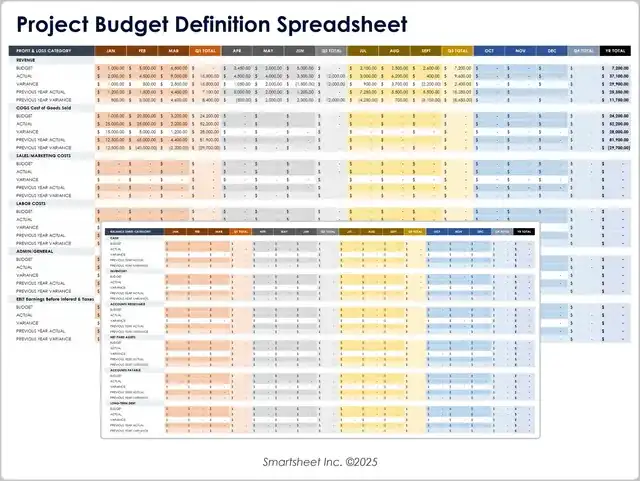
Work with three numbers: what a new customer is worth in gross margin, how many extra customers the site realistically brings, and the full first year cost. Suppose a customer is worth $500, the site adds three enquiries a month and converts two of them, and year one costs $7,000. That is $12,000 of margin for $7,000, before referrals and repeat business.
Selling online strengthens the case because the site itself processes revenue around the clock; our Spanish guide to cuanto vale una web con pasarela de pago, what a payment enabled site is worth, runs those numbers for shops. Write your version down. If the arithmetic fails with honest inputs, that is a signal to spend less, not to abandon the idea.
Honest cases where it can wait
Fairness matters, so here is the other side. If you sell exclusively inside one marketplace and its rules suit you, a site can wait, though that dependence deserves a plan. If you are still validating an idea with no offer and no pricing, spend $500 on a one page card and your time on conversations instead.
And if quotes have all come back absurd, the market is telling you to scope smaller: our Spanish guide to cuanto cobra un diseñador web freelance shows what solo specialists charge, which often lands between the DIY option and the studio one. Waiting is a strategy only when it is a decision with a date attached.
Is a website worth it on a tight budget?
Worth scales with spend discipline. A $2,000 to $3,500 build with strong copy and clean search setup is enough to start collecting enquiries, provided you feed it with referrals, local listings and a little content. If you already have a site that is dated but structurally sound, renewal can beat replacement; our Spanish guide to coste renovar pagina web antigua compares the two routes. Renewal also preserves any search equity the old site has earned.
What is almost never worth it is the gap in between: an expensive build bought before the offer is proven, or a cheap build left unmaintained until it becomes a rebuild. Spend the smallest amount that produces real enquiries, then let revenue fund the upgrades.
Making the investment pay back faster
Three levers shorten payback. First, speed, because slow pages quietly dispose of visitors; even modest tuning pays for itself, and our Spanish comparison of cuanto cuesta optimizar velocidad web prices the options. Second, clarity: one page, one job, one obvious next step, reviewed against real enquiries every month.
Third, tracking: know which pages produce enquiries so you can double down where the maths works. None of the three levers needs a big budget, and a quarterly review keeps the effect compounding. With those in place, most owners see the site move from a cost line to a measurable channel within two quarters, and the original question, whether it was worth it, quietly answers itself.
Frequently asked questions
Is a website worth it for a very small business or sole trader?
Usually yes, because a sole trader site does three quiet jobs: it proves you exist, answers buyer questions while you work, and collects enquiries you would otherwise miss. A focused three to five page build costing $1,500 to $3,500 is enough. Compare that to what one lost job per month costs you and the decision usually makes itself.
How long before a website pays for itself?
Service businesses with a clear offer often see payback in six to eighteen months, depending on how competitive local search is and how actively the site is promoted. Shops can be faster if repeat purchases exist. The biggest delay is launching with weak content and no tracking, because then nothing can be improved and payback stalls indefinitely.
Is a website worth it if I already use Instagram?
You need somewhere to send the people Instagram convinces. A profile cannot hold your full offer, prices, FAQ and booking flow in a searchable structure, and its reach depends on an algorithm you do not control. Use Instagram to build familiarity and a website to convert it. The two together outperform either one alone.
When is a cheap website not worth it?
When it loads slowly, cannot be found for your service and area, or looks less credible than the competitors a buyer compares you with. Those faults cost enquiries continuously, which makes a $700 site more expensive than a $3,000 one within a year. Spend the least that produces a fast, clear, findable site, and improve it from real data.